
31 January, 2026
Retire from your profession but not your vision! I once asked a government officer about his plans after retirement. He replied: “I will relax and play with my grandchildren.” I was shocked! As a high-school swimming team member, I would compete in four laps freestyle races. We avoided exerting ourselves in the first three laps and gave all we had in the last 4th lap. We knew that even if we pulled a muscle, we could allow ourselves to heal later on. If we were to live to be 80 and the average retirement age is 60 years, we shall have around 20 years – our last lap – after retirement.
To slow down after retirement is akin to slowing down in the last lap of our swimming race. At 60, with ample work experience and acquired wisdom, coupled with fewer financial and familial responsibilities, this is the opportune moment to give our utmost and play the masterstroke of our lives. Collins Dictionary defines a masterstroke as a masterly action or achievement, an extremely skillful or effective action. People have redefined history through their masterstrokes; interestingly, many have been played in advanced years of people‘s lives. It is a blessing that these people didn‘t retire to relax and play with their grandchildren.
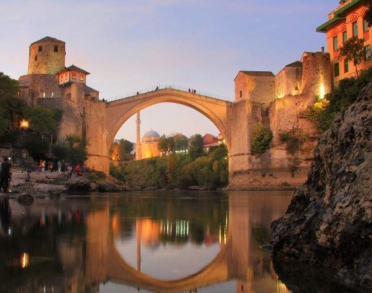
Alija Izzetbegovic became president on March 3, 1992, when Bosnia declared independence from Yugoslavia. A vicious war erupted where both the Bosnian Serbs and Bosnian Croats, aided by militarily powerful Serbia and Croatia, carried out ethnic cleansing aiming to wipe out the Muslim presence from Bosnia.
I arrived as a relief worker in former Yugoslavia on October 28, 1992. I carefully observed Izzetbegovic as he led the Muslims in the war till the peace agreement on December 14, 1995. Had it not been for the blessing of Allah (SWT) and the character and competence of Izzetbegovic, Bosnia would have become another Spain. The three years and nine months that Izzetbegovic steered the Muslims out of the tsunami of death and destruction is his masterstroke! His age was 66. He was born on August 8, 1925.
A few months ago, I met Mufti Taqi Usmani Saheb. He has recently completed a phenomenal work called ‘Asan Tarjuma ul Quran,‘ a translation that has gained international recognition. He asked me if I knew he had started working on a more significant project, a Tafseer (explanation or commentary) of the Quran. I said no.
He immediately got up, gifted me two volumes, and told me he was working on the rest. There was a sparkle in his eyes. This will be another masterstroke of Taqi Saheb. His age is 79 years. He was born on October 5, 1943.
Maulana Shabir Ahmed Usmani has phenomenal accomplishments. He joined Mr. Mohammed Ali Jinnah in the struggle for Pakistan, acting as his advisor after independence and leading his funeral prayers. He was honored to be the first person to raise the flag of Pakistan in Karachi, West Pakistan, after independence, in the presence of Mr. Jinnah and Mr. Liaqat Ali Khan. He authored multiple books, the most powerful and famous of which is Tafseer-e-Usmani, which he co-authored with his teacher Shaikh-ul-Hind Maulana Mahmud Hasan. His greatest masterstroke played a significant role in the passage of the Objectives Resolution on March 7, 1949, which firmly based the constitution of Pakistan on the Quran and Sunnah and is now the constitution‘s preamble. It begins by saying: “Sovereignty over the entire Universe belongs to Allah Almighty alone, and the authority which He has delegated to the state of Pakistan, through its people, for being exercised within the limits prescribed by Him is a sacred trust.” Maulana Shabir Ahmed Usmani was born on October 11, 1887, and was 62 when the resolution was passed.
People create masterstrokes because they realize that their advanced years are their last laps in the race of life and that once death arrives, the race will be over, and the opportunity to gain rewards for Akhirat and make a difference in this world will end. They have decided to go down fighting and not resting or playing with their grandchildren Some feel that their professions were not meaningful, and they view retirement as an escape from the mundane existence that they were bearing. They mistake meaninglessness with uselessness. Their work may not have been meaningful, but it was useful: they were getting a paycheck, paying bills, and supporting their family.
Retirement, on the other hand, is both meaningless and useless. If you did not find meaning in Engineering, you could look for meaning in different domains like humanitarian work, social work, or Islamic movements. Another reason that people choose a life of oblivion is that their visions do not transcend their retirement. Whereas actually, our visions should transcend our lives.
In 2002, I was honored to facilitate the first vision statement of the Rufaydah Foundation set up by Dr. Abdul Bari Khan; he wanted to contribute to the vision of the Prophet (SAW) by setting up a network of excellence-driven free hospitals globally. This vision inspired Mr. Abdul Qayyum, a trustee of the Islamic Mission Hospital (IMH), to initiate the transfer of the partially constructed IMH and 20 acres of prime land in Karachi to the Rufaydah Foundation.
IMH was renamed ‘Indus Hospital,‘ now the Indus Hospital & Health Network (IHHN), with 17 facilities around Pakistan that provide free healthcare to over 500,000 patients monthly. Dr. Bari envisioned Indus hospitals around the globe 20 years ago. Today it is the largest health network in Pakistan. He has another 194 countries to go. Born on July 21, 1961, he is 62 years of age. It is doubtful that Dr. Bari will see Indus Hospital in the rest of the world by the time he dies, but be assured that he will be busy till the end. Inshallah, his dream will live on. I leave you with a few questions:
- Do you have a vision that transcends your life?
- Are you planning to speed up or slow down in your last lap?
- What would your masterstroke be before you die?